
PAE for BPH (Prostatic Artery Embolization)
What Is PAE for BPH?
PAE for BPH is an interventional radiologic procedure, where the prostate shrinks after tiny particles are injected into its blood vessels. Many men are choosing PAE because it offers a faster recovery time and a higher likelihood of preserving sexual function compared to other BPH treatment options. PAE treatment in San Antonio is performed at our IR Center.
An interventional radiologist is a doctor who uses imaging tools like X-ray, CT, MRI, or ultrasound. They guide small instruments through blood vessels. This helps treat conditions in real time, avoiding transurethral and open surgery.
During PAE, the interventional radiologist:
- Makes a tiny puncture in an artery in your groin or wrist
- Threads a very thin, flexible tube into the arteries that supply blood to your prostate
- Injects microscopic particles through the tube into those arteries
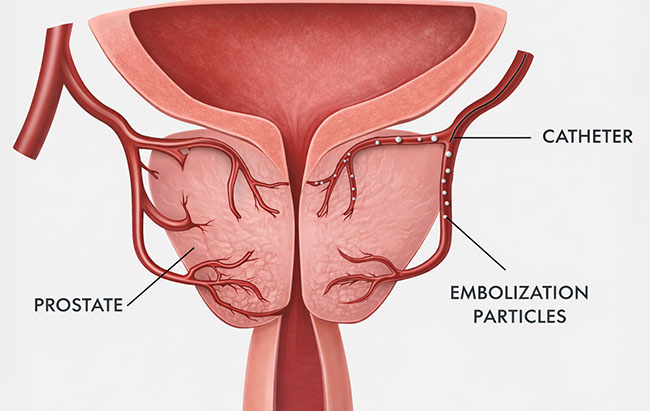
These particles block part of the blood flow to the enlarged portion of the prostate. Over time, reduced blood flow causes that portion of the prostate to shrink. As the gland becomes smaller, it exerts less pressure on the urethra and bladder, which can ease urinary symptoms and improve urine flow.
What is Benign Prostatic Hypertrophy (BPH)?
Benign prostatic hyperplasia (BPH) is a noncancerous enlargement of the prostate gland. It is caused by increased cell growth. It becomes more common with age, with rates rising significantly in men over 50 and continuing to increase over time.
As the prostate gets bigger, it can press on the urethra and affect the bladder, leading to:
- A weak urine stream
- Trouble starting to urinate
- Stopping and starting mid-stream
- The need to get up at night to urinate
- Feeling like you didn’t fully empty your bladder
Some men get enough relief with medications or lifestyle changes, like cutting back on evening fluids and caffeine. For others, the side effects of medication become a problem, or these steps simply don’t improve symptoms enough. At that point, your urologist may recommend a procedure.
BPH treatment options in San Antonio are available with our expert, experienced urologists.
Where Does PAE Fit Among BPH Treatment Options?
Minimally invasive procedures, like Urolift and Rezum, work inside the urethra. They are effective, but not ideal for every prostate shape or size. Very large prostates may respond less well.
Traditional procedures for BPH focus on removing or destroying the part of the prostate that blocks urine flow. These include:
- TURP (transurethral resection of the prostate)
- GreenLight laser
- Holmium laser enucleation of the prostate (HoLEP)
These operations provide good results, but may involve:
- A hospital stay
- A catheter placed in the urethra for a short time after surgery
- A higher risk of sexual side effects, such as semen going into the bladder instead of out through the urethra
PAE offers a different approach:
- It is performed through an artery in the wrist or groin, not through the urethra
- It can be an option for men who:
- are not good surgical candidates
- have very large prostates
- want to minimize sexual side effects
- want to avoid a Foley catheter after the procedure
Because the procedure uses needle punctures instead of larger surgical cuts or cameras in the urethra, it generally results in:
- Less risk
- Less pain
- A shorter recovery time
How Is PAE Performed?
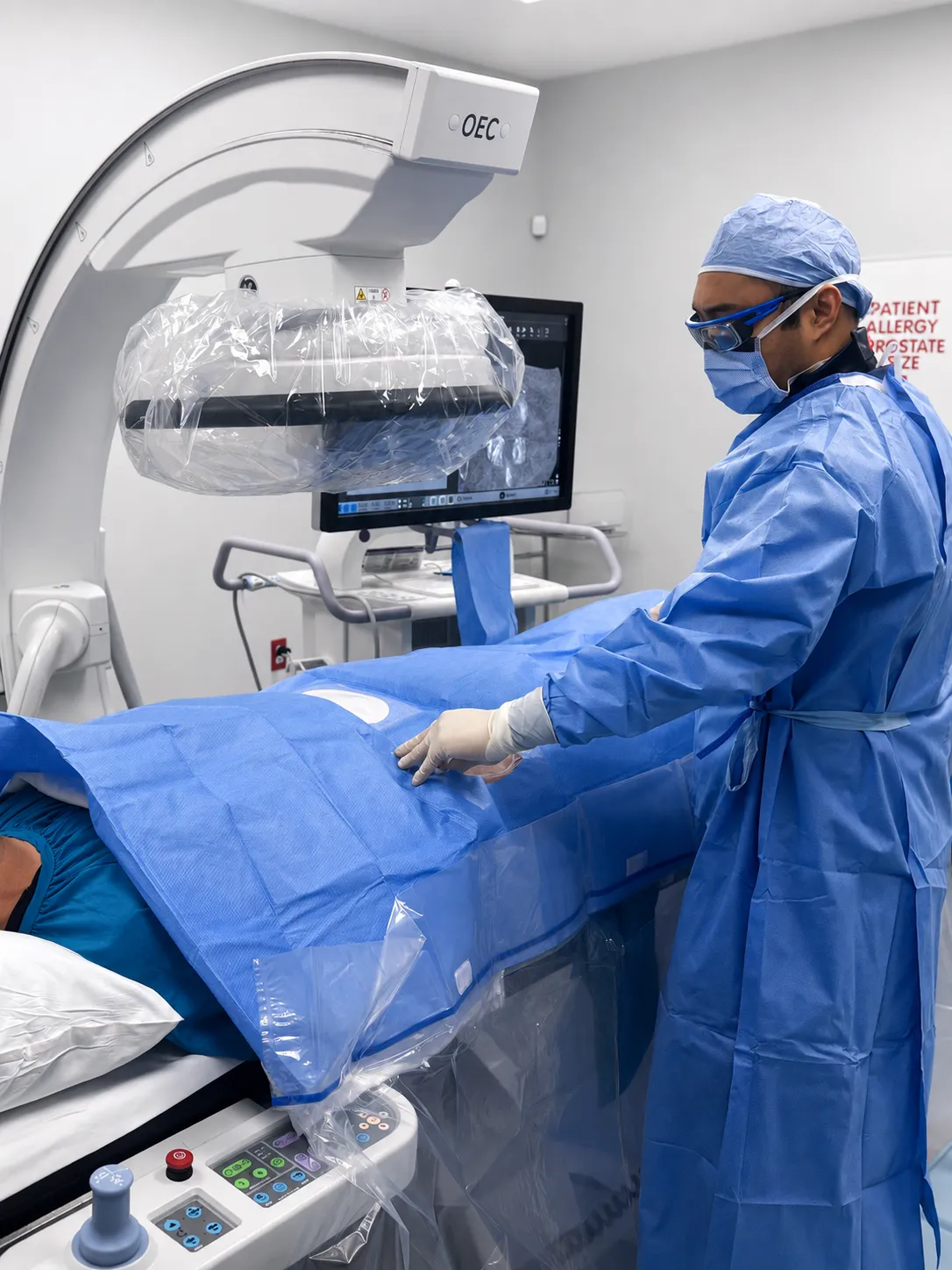
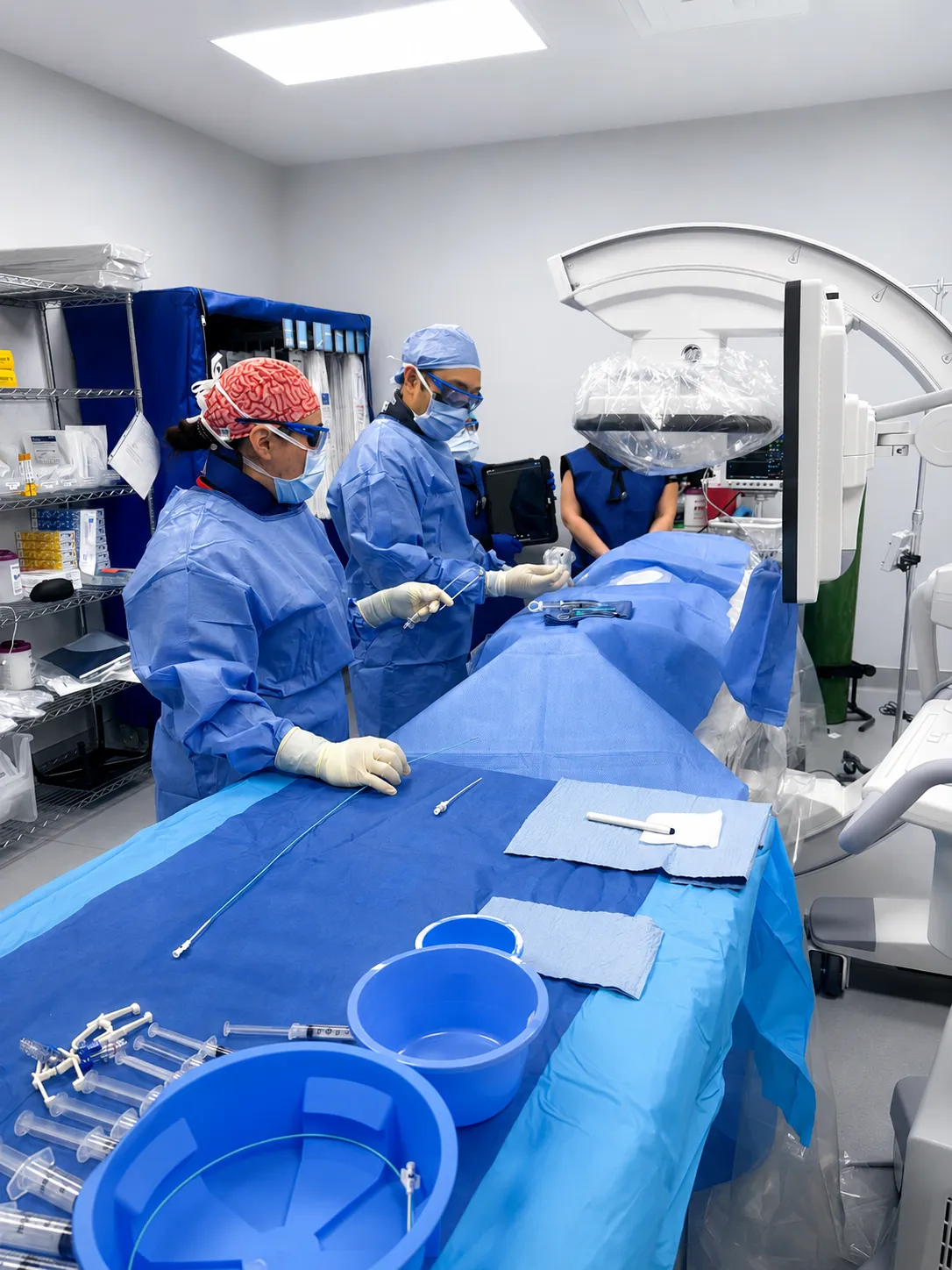
PAE is performed in an IR center by an interventional radiologist. It’s typically done as an outpatient procedure using light sedation to help you relax. The doctor first numbs the skin over an artery in your groin or wrist. Then, they use live imaging to thread a small tube, called a catheter, into the blood vessels.
When the catheter gets to the arteries supplying the prostate, small particles are released. This helps reduce blood flow to specific areas of the gland.
When treatment is finished, the catheter is removed, and the artery is sealed. The entire procedure takes about one to two hours, sometimes a bit longer depending on your anatomy.
You can often resume light normal activities within 24 to 48 hours, but strenuous exercise and heavy lifting are usually avoided for a few days.
Mild soreness at the puncture site or pelvic discomfort is typically short-lived.
Improvements in urine flow and symptom scores often begin within weeks and continue to improve over the first few months. Urinary frequency, urgency, or burning may get worse for a few days. This is normal as the prostate reacts to treatment.
What Are the Benefits of PAE?
PAE offers several benefits compared with traditional surgery and even some of the other BPH procedures.
- It is minimally invasive
- A short recovery and quick return to routine
- A lower risk of sexual side effects
- No surgical cutting or removal of prostate tissue is needed
- A lower risk of urinary incontinence
- It often avoids a post-procedure urethral catheter
- It is an option for men who cannot or prefer not to have surgery
PAE can be particularly helpful for men with medical conditions that increase surgical risk.
What Are the Possible Side Effects of PAE?
PAE is generally safe, but every procedure carries some risk. Possible side effects and complications include:
- Increased urinary frequency, urgency, or burning with urination for several days
- Mild pelvic or rectal discomfort
- Small amounts of blood in the urine or semen
- Bruising or tenderness at the catheter insertion site
Less common risks include:
- Urinary tract infection
- Temporary urinary retention, rarely requiring a urinary catheter
- Non-target embolization can occur. Here, particles impact nearby tissues. This may lead to skin discoloration or other localized effects. It is very rare.
What Results Can I Expect From PAE?
Most men experience:
- Better urine flow in the matter of a few weeks
- Less urgency and nighttime urination
- Improvements that can last several years
Our IR center is designed to expand our services, offering PAE with the highest level of urologic care. A full evaluation by our specially trained urologists in San Antonio will help determine if PAE is a good fit for you.
PAE FAQs
1. Will I still need BPH medications after PAE?
Many men can reduce or even stop their BPH medications after a successful PAE. This is because their urinary symptoms improve and the prostate shrinks. Some men may continue a low dose of certain medications if it helps to fine-tune symptom control.
2. Does PAE treat prostate cancer?
PAE is a treatment for benign prostatic hyperplasia. It does not treat prostate cancer and is not used in place of cancer therapies.
3. What does PAE stand for?
PAE stands for prostatic artery embolization. It’s a procedure used to shrink an enlarged prostate.
4. How do I request a PAE consultation?
Simply complete the form below and our team will guide you through the easy process.